
Lehi Dissolution Of Marriage Filing Records
Lehi dissolution of marriage records are created and maintained at the Fourth District Court in Utah County. Lehi sits in the northern part of Utah County and has grown rapidly in recent years as part of Utah's Silicon Slopes tech corridor. Despite its growth, all dissolution of marriage cases for Lehi residents go through the same court as every other Utah County city: the Fourth District Court at 137 North Freedom Boulevard in Provo. The District Court Clerk holds all filed dissolution records and makes most of them available to the public upon request under Utah's records access laws.
Lehi Quick Facts
Where Lehi Residents File for Dissolution
Lehi is in the northern part of Utah County, roughly 15 miles north of Provo. Despite the distance, Lehi residents must file dissolution of marriage petitions at the Fourth District Court in Provo. There is no separate filing location for north county cities. The Fourth District Court at 137 North Freedom Boulevard in Provo handles all Utah County dissolution cases, regardless of which city the petitioner lives in.
| Court | Fourth District Court - Utah County |
|---|---|
| Address | 137 North Freedom Boulevard Provo, UT 84601 |
| Phone | (801) 429-1000 |
| Hours | Monday through Friday, 8:00 AM to 5:00 PM |
| Website | utcourts.gov |
Lehi residents can also file certain documents electronically through the Utah court e-filing system, which reduces the need for in-person visits. Call the clerk's office at (801) 429-1000 to ask about what can be submitted online versus in person for your specific case type.
Note: The Lehi City Justice Court handles misdemeanor charges and city ordinance violations only. Dissolution of marriage is a district court matter and must be filed in Provo, not at the local city court.
Lehi City Justice Court vs. Fourth District Court
Lehi has a city justice court that handles local matters. It does not have jurisdiction over dissolution of marriage cases. The distinction matters because Lehi's rapid growth has brought many new residents who may not know which court handles which type of case.
The image below comes from the City of Lehi's official website and shows the scope of the Lehi City Justice Court.
Dissolution cases in Lehi always go to the Fourth District Court in Provo. The city court and the district court are entirely separate systems.
Searching Lehi Dissolution of Marriage Records
Several options exist for searching Lehi dissolution records. The Utah Court System's free online portal lets you search by party name or case number. Results show basic case data including filing date, case status, and the names of both parties. This is the easiest starting point if you do not already have the case number.
For document copies, contact the District Court Clerk directly. Plain copies cost $4 per document plus $0.50 per page. Certified copies carry additional fees. You can request records in person, by phone, or in writing. Written requests should name both parties and include the case number.
XChange is a paid subscription service that gives access to Utah court records. It costs $30 per month and supports searches by party name, case number, and date range. Attorneys, title companies, and researchers who need to run many searches often use this system. A Lehi resident looking up a single case would likely find a walk-in or written request more practical.
The image below comes from a Utah court records reference source that explains judicial districts and how dissolution record searches work across the state.
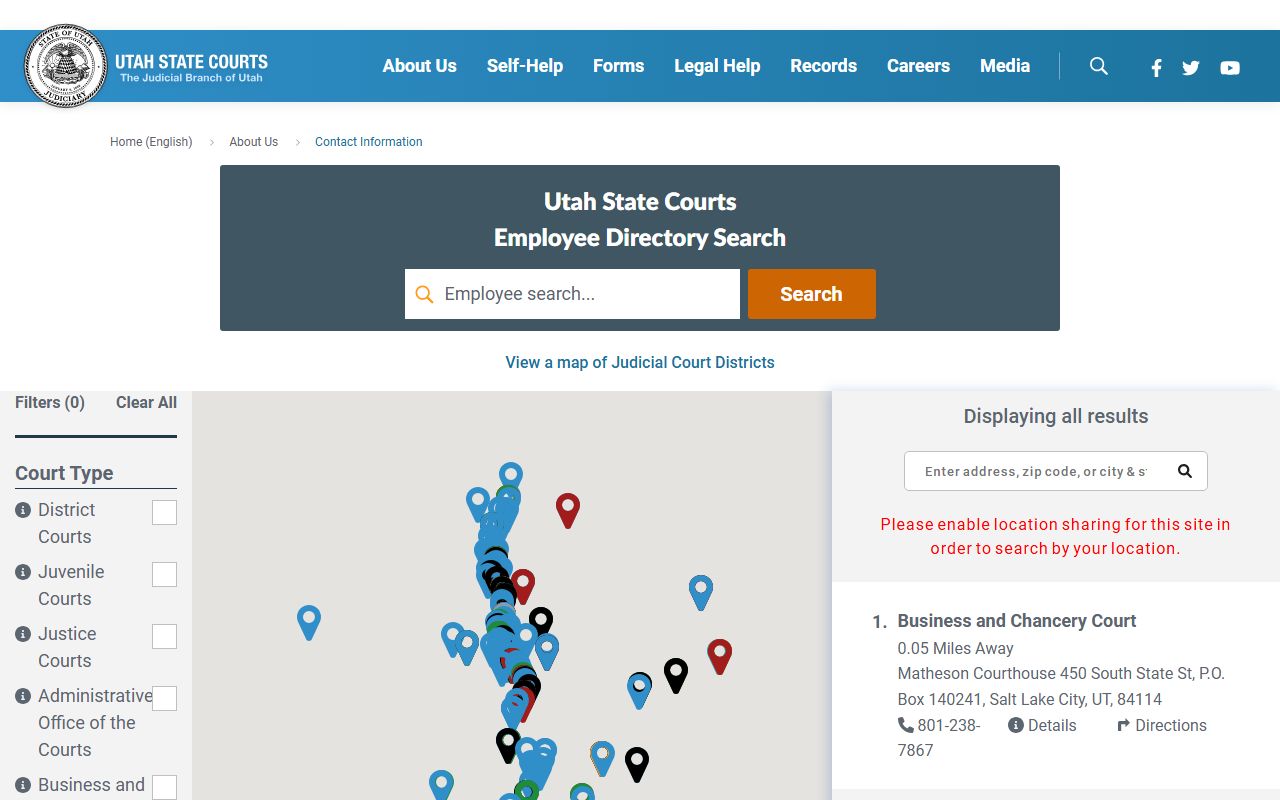
Lehi falls within the Fourth District, which means all searches for Lehi dissolution cases should be directed to the Fourth District Court records system.
Lehi Dissolution Records - Utah Residency and Grounds
To file for dissolution in Lehi, at least one spouse must have lived in Utah and in Utah County for three full months. This residency requirement comes from Utah Code § 30-3-1. Lehi has seen heavy population growth from people relocating for technology jobs. New residents who have not yet met the three-month mark must wait before filing.
Utah Code § 30-3-1 lists the grounds a petitioner can use when filing for dissolution. Irreconcilable differences is the no-fault option and the most commonly used ground in Lehi dissolution cases. Fault grounds recognized under Utah law include adultery, willful desertion for one year or more, willful neglect, habitual drunkenness, conviction of a felony, cruel treatment, and incurable insanity. Each ground has its own requirements and implications for how the case proceeds.
Once the petition is accepted, a mandatory waiting period applies before the court can enter a final decree. The wait is 30 days when no minor children are part of the case. It extends to 90 days when minor children are involved, as set by Utah Code § 30-3-18. Property is divided under the equitable distribution standard of § 30-3-5. Courts look at each spouse's financial circumstances, contributions to the marriage, and other factors when deciding how to split assets.
Lehi Dissolution Records - Vital Records and Older Files
A dissolution certificate for a Lehi case can be ordered from the Utah Office of Vital Records. This office maintains a statewide registry of dissolution records from 1978 to the present. The certificate is a brief summary document, not the full court order. For most legal matters, you will need the dissolution decree from the Fourth District Court rather than the vital records certificate.
Contact the Office of Vital Records at vitalrecords.utah.gov or by phone at (801) 538-6105. The mailing address is 288 North 1460 West, Salt Lake City UT 84116. The first copy of a certificate costs $18, and each additional copy is $10.
Older Lehi dissolution case files may be stored at the Utah State Archives. The archives accept research requests and can tell you whether a specific old file is in their collection. Reach them at (801) 531-3800 or online at archives.utah.gov.
Note: For cases from before 1978, vital records certificates are not available. Your only option for those older cases is the court file itself or the state archives collection.
Lehi Dissolution and GRAMA Public Access Rules
Utah's Government Records Access and Management Act governs who can see dissolution records in Lehi and across the state. Under GRAMA § 63G-2-201, court files are presumed public. Any person can request access to a Lehi dissolution file without having to explain why. The court does not require a stated purpose for most records requests.
Exceptions exist. Financial documents, records about minor children, medical information, abuse allegations, and sealed records are withheld from public access. These protected items may be redacted or removed from the copy you receive. If you request a file and it seems incomplete, those missing pages likely fall under one of these categories.
Legal Help for Lehi Dissolution Filers
Utah Legal Services offers free legal assistance to qualifying low-income Lehi residents. Check eligibility and service details at utahlegalservices.org. The Utah State Bar lawyer referral line at (801) 531-9077 connects Lehi residents with private family law attorneys for paid consultations.
The Utah Courts self-help center at utcourts.gov/howto/divorce provides free forms and step-by-step instructions for filing without an attorney. This works best for Lehi residents with uncontested dissolutions where both spouses agree on all terms. Contested cases with significant property or custody disputes often benefit from legal representation.
Lehi residents who want to understand the difference between a dissolution decree and a divorce certificate before they file can find useful background information at various legal reference sites. Knowing what type of document you ultimately need can help you plan your request from the right office.
Utah County Dissolution Of Marriage Records
Lehi is in Utah County. All dissolution of marriage cases go through the Utah County District Court. For county resources and full record details, visit the Utah County page.
Nearby Utah Cities
These nearby Utah County cities also file dissolution of marriage cases at the Fourth District Court.