
Morgan County Dissolution Of Marriage Information
Morgan County sits in north central Utah and takes its name from Jedediah Morgan Grant, an early apostle of The Church of Jesus Christ of Latter-day Saints. The county seat, also named Morgan, is where residents turn for dissolution of marriage proceedings handled by the Second Judicial District. That district also serves Davis County and Weber County. This page explains how to access dissolution records in Morgan County, what state offices support the process, and what legal requirements govern cases from initial filing through final decree.
Morgan County Quick Facts
Second District Court Morgan County Divorce
The Second Judicial District covers Davis, Morgan, and Weber counties. Morgan County dissolution petitions are filed with the Second District Court clerk. Because Morgan County is smaller than its neighboring Davis and Weber counties, it is worth confirming exactly which courthouse location serves Morgan County filers before making the trip. The Utah Courts directory provides current addresses and phone numbers for Second District locations.
The Second District Court clerk maintains all official dissolution case files for Morgan County. That includes the original petition, the summons, financial disclosures, any temporary orders, and the final decree. Contacting the clerk by phone before visiting allows you to confirm what you need to bring and whether a specific record is available in person or must be requested in writing.
Court clerks can answer procedural questions. They cannot provide legal advice. If you are unsure how to complete a form or how a rule applies to your specific situation, a self-help resource or an attorney is the appropriate source of guidance.
Utah Residency Rules For Morgan County Filers
Filing a dissolution petition in Morgan County requires that at least one spouse have been a Utah resident for three months prior to the filing date. This rule comes from Utah Code Title 30, Chapter 3, which governs dissolution of marriage statewide. The three-month period measures actual Utah residency, not time in Morgan County specifically. A person who moved to Morgan from Salt Lake County, for example, can count time spent in both counties toward the three-month total.
Utah law recognizes ten grounds for dissolution. The most commonly used is irreconcilable differences, which does not require proving fault by either party. Other recognized grounds include impotency at the time of marriage, adultery, willful desertion for more than one year, willful neglect, habitual drunkenness, conviction of a felony, and cruel treatment causing bodily injury or great mental distress. The full list appears in Utah Code Title 30-3-1.
Most Morgan County filers use irreconcilable differences. It is the most straightforward ground and requires no supporting evidence beyond the petitioner's statement.
Note: Residency is established by physical presence combined with intent to make Utah your primary home. Temporary absences for work or family reasons generally do not break the residency period.
Morgan County Dissolution Records And Public Access
Utah court rules changed public access to divorce case files on April 1, 2012. Case files opened after that date are private. The parties to the case, their attorneys of record, and those who obtain a court order may access restricted files. Decrees and orders, however, remain public documents and can be requested through the clerk by anyone who provides the case number or party names.
Dissolution records from before April 1, 2012 follow the older public access standard. Researchers, family members, or genealogists seeking older Morgan County dissolution records may be able to view those pre-2012 files through the Second District Court clerk or, if the records have been transferred, through the Utah State Archives. Calling ahead to confirm where a specific file is held saves time and avoids a wasted trip.
GRAMA, the Government Records Access and Management Act at Utah Code Title 63G, Chapter 2, defines the framework for public records requests in Utah. Understanding GRAMA is useful if a records request is delayed, partially fulfilled, or denied.
Vital Records Services For Morgan County Residents
The Utah Office of Vital Records and Statistics maintains a statewide index of dissolution records. Morgan County residents can request certified copies of dissolution records through the Vital Records office in Salt Lake City without traveling to the Morgan courthouse. The office is at 288 North 1460 West, Salt Lake City, UT 84116, and the phone number is (801) 538-6105.
The image below from the Vital Records office describes the types of dissolution records available statewide and the steps for requesting certified copies.

Certified copies from Vital Records cost eighteen dollars for the first copy and ten dollars for each additional copy requested at the same time. Mail requests must include a completed application form, a copy of a valid government-issued ID, and a check or money order for the correct amount. The Vital Records website provides current forms and mailing instructions.
Note: Vital Records may not hold records predating statewide registration. For older Morgan County dissolutions, the Utah State Archives is a better starting point.
Utah State Archives And Morgan County Historical Records
The Utah State Archives stores records transferred from county courthouses and state agencies. Older Morgan County dissolution and probate court records may be held at the Archives in Salt Lake City rather than at the local courthouse. The Archives catalog at archives.utah.gov is searchable online and allows filtering by county, record series, and date range.
The Archives phone number is (801) 531-3800. Staff can confirm whether specific Morgan County court series have been transferred and help you submit a records request. For genealogical research involving early Morgan County marriages and dissolutions, the Archives is often the most efficient starting point, especially for records more than several decades old.
Waiting Periods And Decree Entry In Morgan County
Utah sets mandatory waiting periods that apply in every county. The court must wait at least thirty days after the petition is filed before entering a final decree in cases without minor children. When the couple has minor children, the waiting period extends to ninety days. These periods are established by state statute and cannot be shortened by mutual agreement or local court rule.
Property division in Morgan County dissolution cases follows Utah's equitable distribution standard. Equitable does not mean equal. The court weighs factors including each spouse's financial contributions to the marriage, the length of the marriage, earning capacity, and the needs of any children. Both parties are required to submit financial disclosures, and the court uses those disclosures to make informed decisions about property and support.
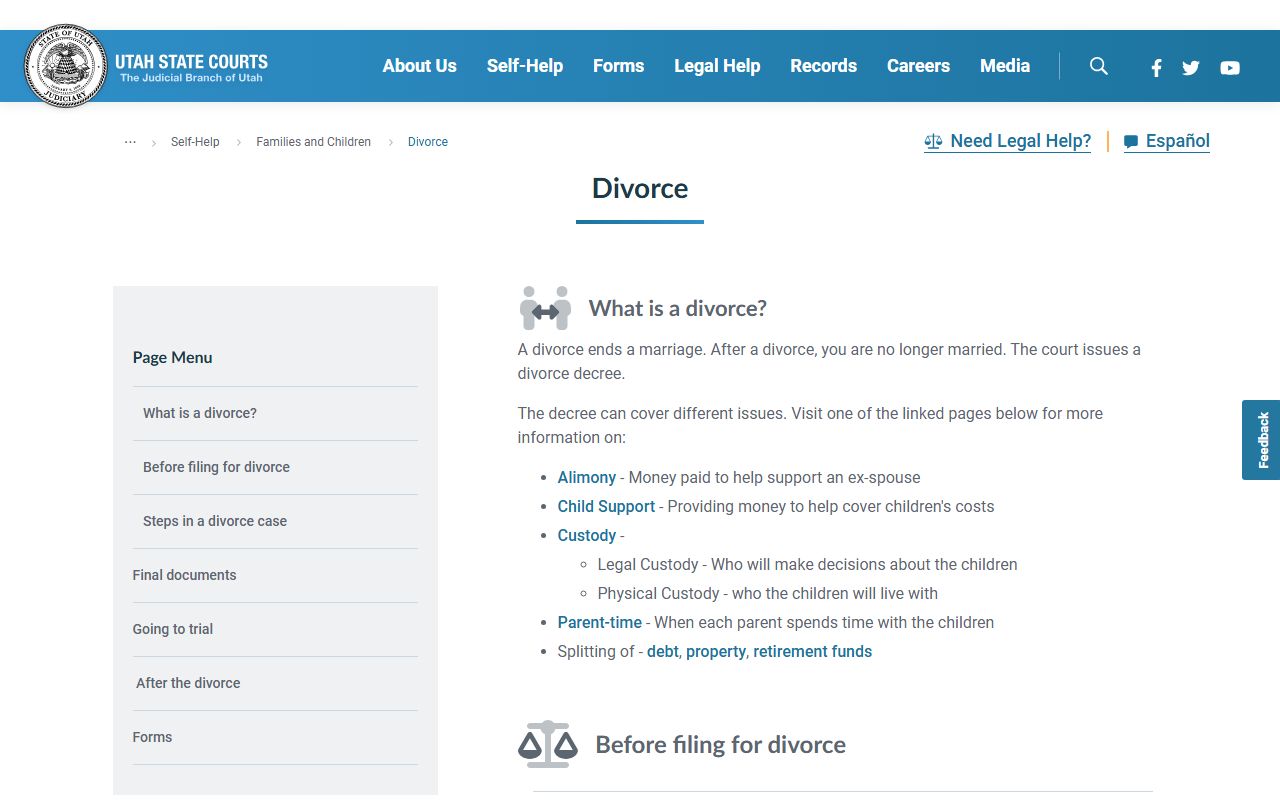
The image below from the Utah Courts self-help page provides a guide to the dissolution process that covers waiting periods, financial disclosures, and the path to a final decree in cases like those filed in Morgan County.
Knowing the waiting period timeline helps Morgan County residents plan for property transfers, custody arrangements, and other matters that depend on the dissolution being finalized.
Decree Versus Case File In Morgan County Court
A common source of confusion for people requesting dissolution records is the distinction between the case file and the decree. The case file contains every document filed in a case, from the initial petition through any post-decree motions. The decree is the single final order that legally ends the marriage and sets out the terms the court has approved.
Post-2012 case files are private in Utah, but decrees remain public. If you only need proof that a dissolution occurred and the basic terms, requesting a copy of the decree is faster and less expensive than seeking access to the full case file. The clerk can provide a certified copy of the decree for the standard document and per-page fees.
A certified copy of a decree carries a court seal and signature. It is acceptable for most legal and administrative purposes, including name change requests and insurance updates.
Legal Help And Self-Help For Morgan County Cases
The Utah Courts self-help center at utcourts.gov/howto/divorce offers step-by-step guides and printable forms for people who handle their own dissolution cases. Morgan County residents can use these resources online without visiting the courthouse. The guides are organized by case type, covering uncontested dissolutions, contested cases, and situations involving children separately.
For those who qualify based on income, Utah Legal Services provides free civil legal assistance. Cases with contested custody, significant assets, or safety concerns are situations where professional legal help can make a meaningful difference. The Utah State Bar operates a referral line at (801) 531-9077 for callers who want to be connected with a licensed family law attorney serving the Second District area, which includes Morgan County.
Cities in Morgan County
Morgan County includes the communities of Morgan, Peterson, Croydon, Hunter, and Porterville, with Morgan serving as the county seat and the location for Second District Court filings and records access.
Nearby Counties
Morgan County borders four other Utah counties, each served by their own district courts for dissolution filings and record access.