
Rich County Dissolution Of Marriage Records
Rich County sits in the far northeast corner of Utah, bordering both Idaho and Wyoming. The county is rural and sparsely populated, with Randolph serving as the county seat. Dissolution of marriage cases in Rich County are handled by the First District Court, which also serves Box Elder and Cache counties. Anyone seeking court records, certified decrees, or general guidance on the dissolution process will need to contact the First District Court clerk or reach out to the Utah Office of Vital Records in Salt Lake City.
Rich County Quick Facts
Rich County Court and Dissolution Overview
Rich County is part of Utah's First Judicial District. The First District Court handles all domestic relations cases filed within Rich County, including petitions for dissolution of marriage. Because Randolph is a small town, court resources are limited compared to more urban districts. Residents should call the court clerk ahead of any visit to confirm hours and procedures.
Utah law requires that at least one spouse live in Utah for three months before filing. That spouse must also have lived in the county where the case is filed for three months. For Rich County filers, both conditions must be met before a petition can be accepted. The Utah Code Title 30, Chapter 3 governs these residency rules along with the grounds recognized by the state.
Ten grounds for dissolution exist under Utah law. Irreconcilable differences is the most commonly cited. Others include willful desertion lasting at least one year, habitual drunkenness, cruel treatment, and felony conviction. Courts in Rich County follow the same statutory framework as all other Utah districts.
Rich County First District Court Filing Process
Filing a dissolution petition in Rich County begins at the First District Court. The petitioner submits a completed set of forms along with the filing fee. Utah's Online Court Assistance Program, known as OCAP, helps self-represented individuals prepare their paperwork for a modest fee. This online tool walks users through questions and generates the forms needed for their specific situation.
After the petition is filed, the respondent must be served with copies of the documents. Utah law then imposes a mandatory waiting period before the court can finalize the case. That waiting period is thirty days when no minor children are involved. When the parties have minor children together, the waiting period extends to ninety days. Rich County judges follow these timelines strictly.
The court date is set once all required documents are on file and the waiting period has passed. Both parties may appear, or the petitioner may attend alone if the respondent has not contested the case. The judge reviews the proposed decree and, if satisfied, signs it into effect.
Note: Rich County's rural location means staffing at the courthouse may be limited; calling ahead to verify availability can prevent unnecessary travel.
Grounds for Dissolution in Utah
Utah recognizes ten statutory grounds for dissolution of marriage. Most petitions filed in Rich County cite irreconcilable differences, which requires no proof of fault. The remaining grounds are fault-based and may affect how the court divides property or awards other relief.
Fault grounds include adultery, willful desertion for at least one year, willful neglect to provide the common necessities of life, habitual drunkenness, conviction of a felony, cruel treatment causing bodily injury or great mental distress, incurable insanity, impotency at the time of marriage, and three years of legal separation. When a party alleges a fault ground, they carry the burden of showing that ground through evidence presented to the court.
Utah Code Title 30 and Rich County Cases
The primary statute governing dissolution in Utah is Utah Code Title 30, Chapter 3. This chapter addresses everything from the initial petition through the final decree. It covers residency requirements, grounds, property division standards, child custody, and support obligations. Rich County cases are governed by the same code as cases filed anywhere else in the state.
The image below comes from the Justia legal database and shows a section of Utah Code Title 30 relevant to dissolution proceedings.
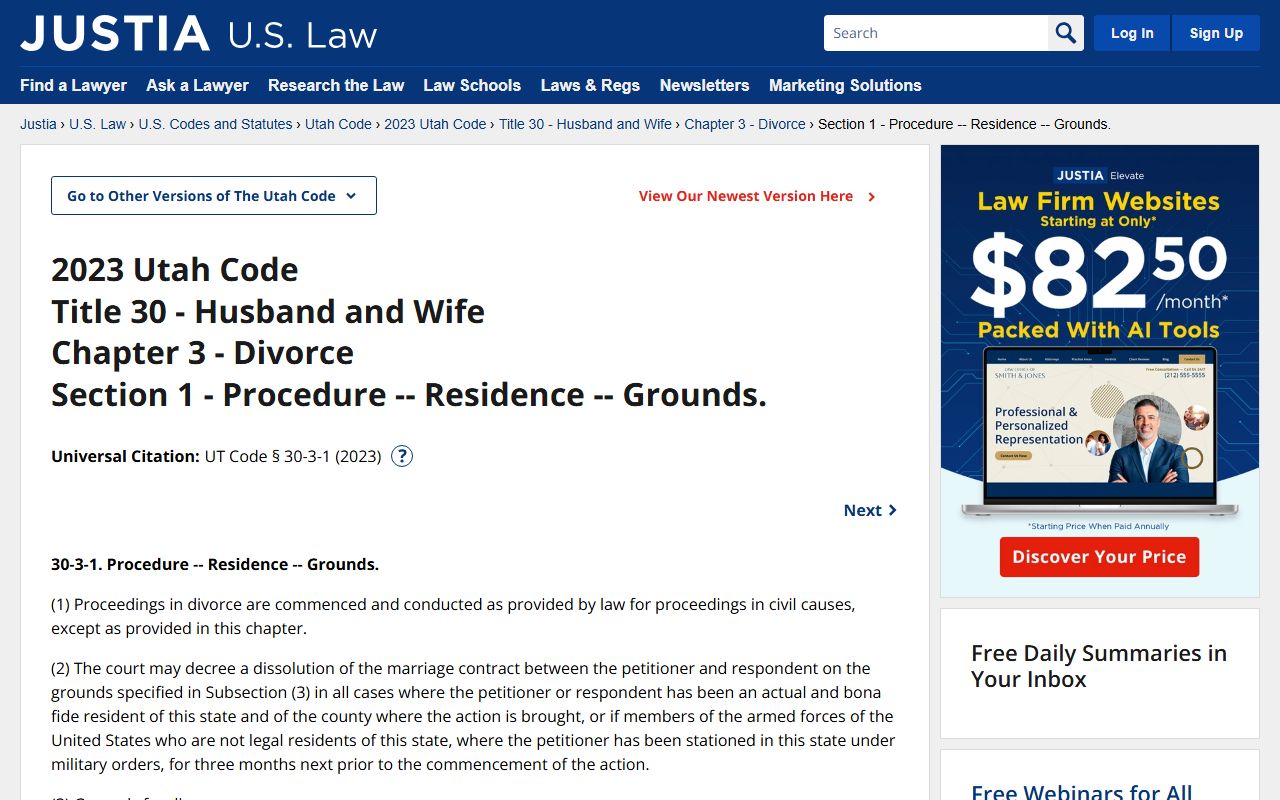
Reviewing the full text of Title 30 before filing can help petitioners understand what the court will consider when dividing assets and addressing custody arrangements.
Under section 30-3-5, the court distributes marital property equitably between spouses. Equitable does not always mean equal. The judge weighs factors such as the length of the marriage, each party's financial circumstances, and contributions made during the marriage. Rich County residents should understand this standard before entering negotiations or presenting their case to the court.
Obtaining Rich County Dissolution Records
Dissolution records in Utah are split between two categories based on their public accessibility. Final decrees and court orders have remained accessible to the public. However, the complete case file became private as of April 1, 2012. Anyone seeking a copy of a divorce decree from Rich County can request it directly from the First District Court clerk.
The clerk's office charges a fee for each document copied along with a per-page fee for the pages within that document. Certified copies cost more than plain copies. If you need a certified copy for legal purposes, be sure to specify that when making your request.
For older records, the Utah State Archives holds historical dissolution records going back to territorial times. Rich County records from the late 1800s and early 1900s may be available through the Archives. Staff at (801) 531-3800 can assist with research requests.
Note: When requesting records by mail from any Utah court, include a self-addressed stamped envelope and a clear description of the case you are seeking.
Vital Records for Rich County Residents
The Utah Office of Vital Records maintains statewide records of dissolution certificates. These certificates confirm that a dissolution took place and list key details such as names and the date the decree was entered. Vital records are separate from court records and are held at a different office.
The Utah Office of Vital Records is located at 288 North 1460 West in Salt Lake City, Utah 84116. The office can be reached by phone at (801) 538-6105. The first certified copy of a dissolution certificate costs eighteen dollars. Each additional copy ordered at the same time costs ten dollars.
The image below is from the Utah Office of Vital Records website and provides information about ordering vital records certificates.

Rich County residents who need a dissolution certificate for purposes such as remarriage, name change, or legal proceedings should contact the Vital Records office directly.
GRAMA and Public Record Access in Rich County
Utah's Government Records Access and Management Act, known as GRAMA, sets the rules for how government agencies manage and release public records. Court records fall under a separate access framework governed by the Utah Rules of Civil Procedure and judicial council policies, but GRAMA principles still inform how county and state offices handle records requests.
When requesting records from the First District Court or any other government office in Rich County, a written request is the clearest approach. The agency must respond within ten business days and either provide the records, deny the request with a stated reason, or notify you that more time is needed. Understanding GRAMA helps residents know their rights when seeking access to public documents.
Legal Help for Rich County Dissolution Cases
Rich County residents have access to several resources when navigating a dissolution case. Self-represented parties can use the Utah Courts self-help center for guidance. The site provides step-by-step instructions and links to the OCAP document preparation program.
Income-eligible residents may qualify for free legal help through Utah Legal Services. This nonprofit provides civil legal assistance to qualifying individuals across the state, including those in rural counties like Rich. The Utah State Bar's lawyer referral service can also connect people with an attorney; the referral line is (801) 531-9077.
Finding a local attorney in Rich County can be difficult given the county's small population. Many residents work with attorneys based in Logan or other Cache Valley communities, as those offices are closer to Randolph than Salt Lake City.
Note: Even in uncontested cases, a brief consultation with an attorney can help ensure the decree addresses all necessary legal issues before the judge signs it.
Utah Courts Directory and Rich County Resources
The Utah Courts directory lists contact information for every district court in the state, including the First District Court that serves Rich County. The directory includes addresses, phone numbers, and hours of operation. This is the best starting point for anyone who needs to contact the court directly.
Because Rich County has limited local government infrastructure, many residents also rely on the statewide court website for procedural guidance. The site includes downloadable forms, fee schedules, and information about what to expect at each stage of a dissolution case.
Cities in Rich County
Rich County includes the communities of Randolph, Laketown, Garden City, Woodruff, and Alton, with Garden City being a popular destination along the Bear Lake shoreline.
Nearby Counties
Rich County borders several other Utah counties, each served by its own district court for dissolution matters.