
Grand County Dissolution Of Marriage Records
Grand County dissolution of marriage records are filed through the Seventh Judicial District Court, which covers Carbon, Emery, Grand, and San Juan counties. The county seat is Moab, a well-known eastern Utah community near Arches and Canyonlands national parks. Grand County was named for the Colorado River, which was historically called the Grand River. Residents seeking divorce records, certified decree copies, or information on filing a dissolution of marriage case in Grand County will use Seventh District Court resources and the state-level offices described in this guide.
Grand County Quick Facts
Seventh District Court Grand County Divorce Filings
All dissolution of marriage cases in Grand County go through the Seventh Judicial District Court. Moab is the county seat, and the court serving Grand County residents is located there. The Utah Courts directory provides current addresses, phone numbers, and office hours for all Seventh District locations. Confirming contact details before submitting documents or making an in-person visit avoids unnecessary delays.
Case records held by the Seventh District Court include the original petition, responses, financial disclosures, temporary orders, parenting plans when minor children are involved, and the final decree. The clerk's office provides certified copies at the standard state rate of $4 per document plus $0.50 per page. Most dissolution records in Grand County are public under Utah law, with sealed cases being rare exceptions requiring a specific judicial order.
The Utah Online Court Assistance Program allows parties to prepare dissolution forms online. OCAP is particularly useful for uncontested cases where both parties agree on all major terms. Grand County residents can complete their paperwork through OCAP before filing at the Seventh District Court in Moab.
Utah Dissolution Law and Grand County Residency
Utah Code § 30-3-1 requires that at least one spouse live in Utah for three months before filing a dissolution petition. The same spouse must also have lived in Grand County for three months before filing there. Both conditions must be met at the time the petition is submitted to the Seventh District Court.
Grounds recognized under Utah law include irreconcilable differences, adultery, willful desertion for one or more years, willful neglect, habitual drunkenness, felony conviction, cruel treatment, incurable insanity, impotency at the time of the marriage, and three-year legal separation. Most Grand County filings today cite irreconcilable differences. Courts do not require proof of fault when that ground is used.
After filing, a mandatory waiting period begins. Cases without minor children require at least 30 days before a decree can be entered. Cases with children require 90 days. Property is divided using equitable distribution principles under § 30-3-5. Equitable does not always mean equal; the court weighs each party's contributions, needs, and circumstances before reaching a division.
Utah Code Title 30 Chapter 3 on Justia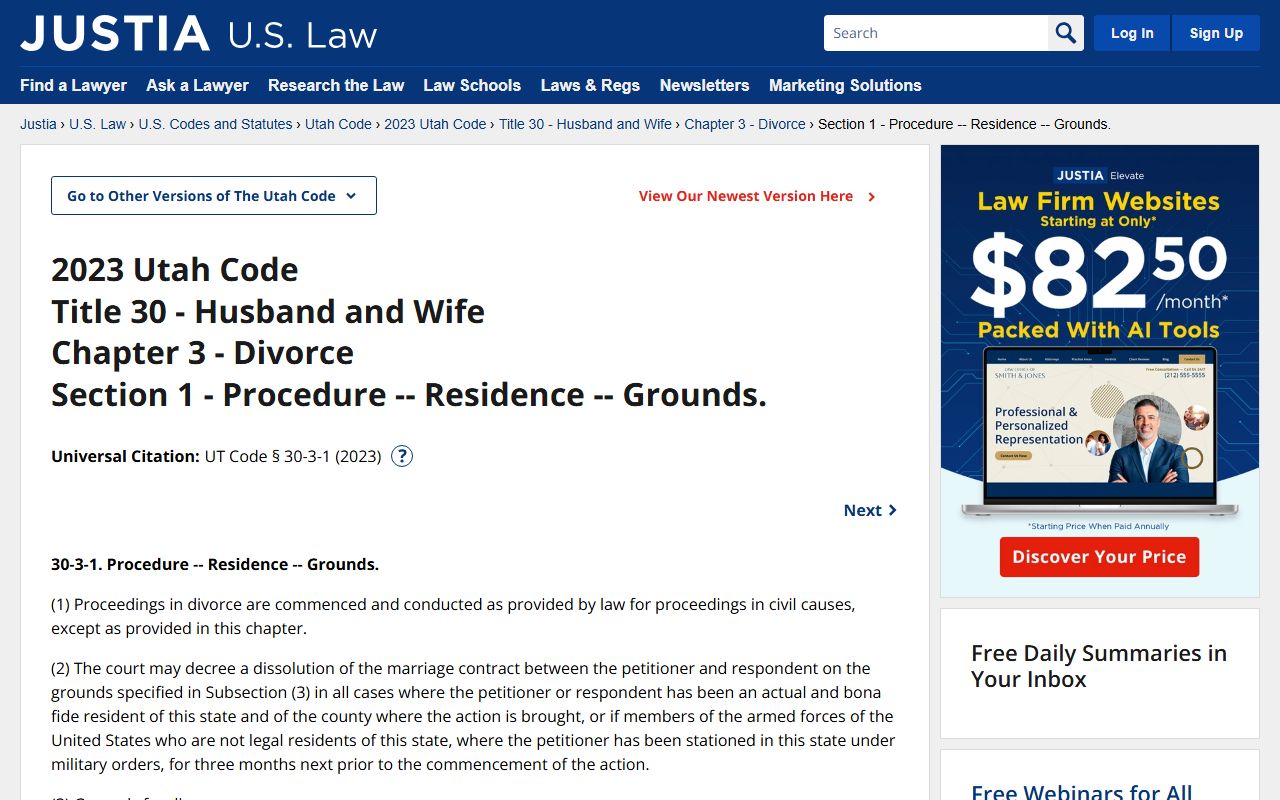
Utah's dissolution statute sets uniform rules for residency, grounds, and waiting periods that apply to every Grand County case filed in the Seventh District.
Grand County Divorce Decrees vs. Certificates
Two distinct documents come from a dissolution proceeding in Grand County. The divorce decree is the full court order. It contains all terms the judge approved, including property division, debt allocation, custody arrangements, and any support orders. This document is issued by the Seventh District Court and carries the court seal and judge's signature.
A divorce certificate is a summary document issued by the Utah Office of Vital Records. It confirms the dissolution occurred and provides basic identifying information, but it does not contain the terms of the decree. Banks, agencies, and legal proceedings may require one or the other depending on their purpose. Legal proceedings and name change applications typically require the full certified decree from the court.
How to obtain divorce certificates in Utah
Understanding the difference between a Grand County court decree and a state-issued divorce certificate helps requesters contact the right office for the right document.
Note: Request the full decree from the Seventh District Court and the certificate from Vital Records; they are separate documents held by different agencies.
Vital Records for Grand County Dissolution Cases
The Utah Office of Vital Records issues divorce certificates for all Utah cases, including those from Grand County. The office is at 288 North 1460 West, Salt Lake City UT 84116. Phone: (801) 538-6105. The first certified copy costs $18, and additional copies ordered at the same time are $10 each.
Vital Records maintains a statewide registry of divorce certificates. Once a Grand County dissolution is reported to the state, Vital Records can process requests from individuals, attorneys, and authorized parties. The registry is not complete for all historical periods, so very old cases may require a direct court or archives request instead.
Utah State Archives and Grand County Historical Records
The Utah State Archives holds government records transferred from courts and county offices across the state. The Archives can be reached at (801) 531-3800. Older Grand County dissolution records, particularly from earlier decades, may be preserved at the Archives if they have been transferred from the Seventh District Court. An online catalog helps researchers identify what is held before requesting access.
Genealogical researchers working on Grand County cases should check both the Archives catalog and FamilySearch, which indexes historical Utah court and vital records. Combining these free resources with a formal records request to the court or Archives often provides the most complete view of a historical dissolution proceeding in Moab or elsewhere in Grand County.
GRAMA and Access to Grand County Records
Utah's Government Records Access and Management Act, at Utah Code Title 63G, Chapter 2, makes most government records public. Dissolution case files at the Seventh District Court are generally public records under GRAMA. To submit a GRAMA request, prepare a written request identifying the case by party names and approximate filing date. Include a case number if known. Submit the request to the Seventh District Court clerk in Moab.
The court must respond within the time frames set by GRAMA. Most straightforward requests are fulfilled within a few business days. If a record has been sealed by a judge, the court will inform you and explain the process for seeking access through a motion. Sealed dissolution records in Grand County are uncommon.
Self-Help and Legal Resources for Grand County Filers
The Utah Courts self-help divorce page provides forms and instructions for filing without an attorney. Both contested and uncontested dissolution cases are covered. The page walks through each stage of the process and links to OCAP for online form preparation. Grand County residents filing in the Seventh District can use these resources without cost.
Utah Legal Services offers free civil legal help to income-qualifying residents in areas including dissolution of marriage, custody, and support. Grand County residents should contact the organization to determine eligibility. The Utah State Bar referral line at (801) 531-9077 connects callers with licensed family law attorneys who practice in the Seventh Judicial District.
Utah Courts self-help divorce guide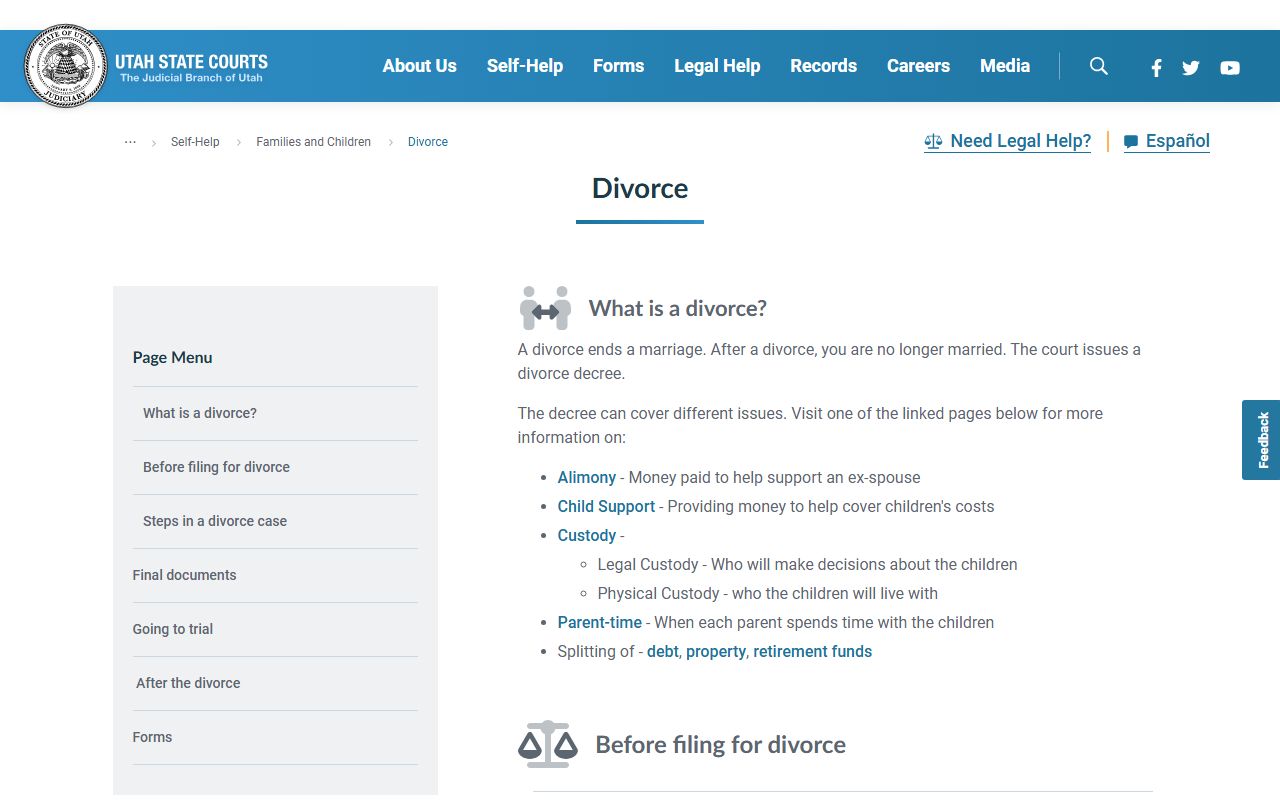
The Utah Courts self-help page covers the full dissolution process and provides downloadable forms that apply to Grand County cases filed in Moab.
Filing Steps for Grand County Dissolution Cases
Filing a dissolution case in Grand County involves several steps. First, confirm that the three-month residency requirement is met for both Utah and Grand County. Second, gather required documents including a marriage certificate and any financial disclosure forms required by the Seventh District Court. Third, complete the petition and related forms using OCAP or by downloading forms from the Utah Courts website.
Submit the completed petition to the Seventh District Court clerk in Moab. Pay the filing fee at that time. Serve the other party according to Utah Rules of Civil Procedure. The waiting period begins on the filing date. After the waiting period, a final hearing may be scheduled or a default decree may be entered if the other party has not responded. Once the judge signs the decree, request certified copies for your records.
Note: Personal service of the dissolution petition on the other spouse is required under Utah Rules of Civil Procedure; failure to serve correctly can delay or derail a case.
Cities in Grand County
Residents from Moab, Castle Valley, and other communities throughout Grand County file dissolution of marriage cases at the Seventh District Court, which has jurisdiction over all family law matters in the county regardless of which community the petitioner lives in.
Nearby Counties
Grand County shares borders with several counties in eastern Utah; the county of legal residence at the time of filing determines the correct Seventh District venue for a dissolution case.