
San Juan County Dissolution Of Marriage Filings
San Juan County is the largest county by area in Utah and occupies the southeastern corner of the state. The county seat is Monticello. Dissolution of marriage cases in San Juan County are handled by the Seventh District Court. The county is remote, and its vast geography includes significant Navajo Nation lands. Residents seeking to file for dissolution or obtain copies of court records should contact the Seventh District Court clerk in Monticello. For statewide vital records, the Utah Office of Vital Records in Salt Lake City maintains dissolution certificates.
San Juan County Quick Facts
San Juan County Seventh District Court Overview
The Seventh Judicial District serves Carbon, Emery, Grand, and San Juan counties. For dissolution cases filed in San Juan County, all proceedings take place through the Seventh District Court. The main courthouse serving San Juan County is located in Monticello, the county seat. Given the county's remote location and large land area, residents in more distant parts of the county may face long drives to access court services.
Petitioners should contact the court clerk before filing to confirm current requirements, hours, and any local rules that may apply. The Utah Courts directory lists current contact details for the Seventh District Court. Staff there can answer questions about the filing process and what documents are required.
San Juan County's distance from major population centers means that legal resources within the county are fewer than in more urbanized areas. Planning ahead and using online tools can help residents manage their case efficiently.
Residency and Filing Requirements for San Juan County
Utah law sets a three-month residency requirement before a dissolution petition can be filed. One spouse must have lived in Utah for at least three months and in San Juan County for at least three months before the case can be initiated in the Seventh District Court. This rule comes from Utah Code Title 30, Chapter 3.
Once the petition is filed and the other spouse is properly served, a mandatory waiting period applies. Cases without minor children require a thirty-day wait before the court can enter a final decree. Cases involving minor children require ninety days. These timelines are set by statute and cannot be waived by agreement of the parties.
The filing fee for a dissolution petition in Utah is approximately three hundred twenty-five dollars. Payment is made to the court clerk at the time of filing. Fee waivers may be available for those who meet financial eligibility requirements; ask the clerk about the waiver process when you file.
Note: Tribal members living on Navajo Nation land within San Juan County should consult with an attorney about whether their case should be filed in state court or Navajo Nation court, as jurisdiction can be a complex issue.
Grounds for Dissolution in San Juan County Cases
Utah law lists ten recognized grounds for dissolution of marriage. All of them apply equally in San Juan County cases. The most commonly used ground is irreconcilable differences, which allows either spouse to seek dissolution without proving fault on the part of the other.
The remaining nine grounds are fault-based. They include adultery, willful desertion for one year or more, willful neglect to provide the necessaries of life, habitual drunkenness, conviction of a felony, cruel treatment causing bodily harm or extreme mental distress, incurable insanity, impotency at the time of marriage, and three years of legal separation. A party who asserts a fault ground must be prepared to present supporting evidence at the hearing.
Choosing which ground to cite can affect other parts of the case. Fault may be considered when the court divides property or determines other terms of the final decree. Consulting with an attorney before deciding which ground to allege is often worthwhile.
San Juan County Dissolution Records and Court Files
Final dissolution decrees and court orders in San Juan County are public records. Anyone may request a copy of a decree from the Seventh District Court clerk. The clerk charges a per-document fee plus a per-page fee for the pages copied.
Complete case files have been classified as private under Utah court rules since April 1, 2012. Before that date, full case files were accessible to the public. For cases filed after that date, only the decree and specific court orders remain open to public inspection. A party to the case retains access to the full file.
The image below is from the Utah Courts self-help website, which provides guidance on how dissolution records are classified and accessed statewide.
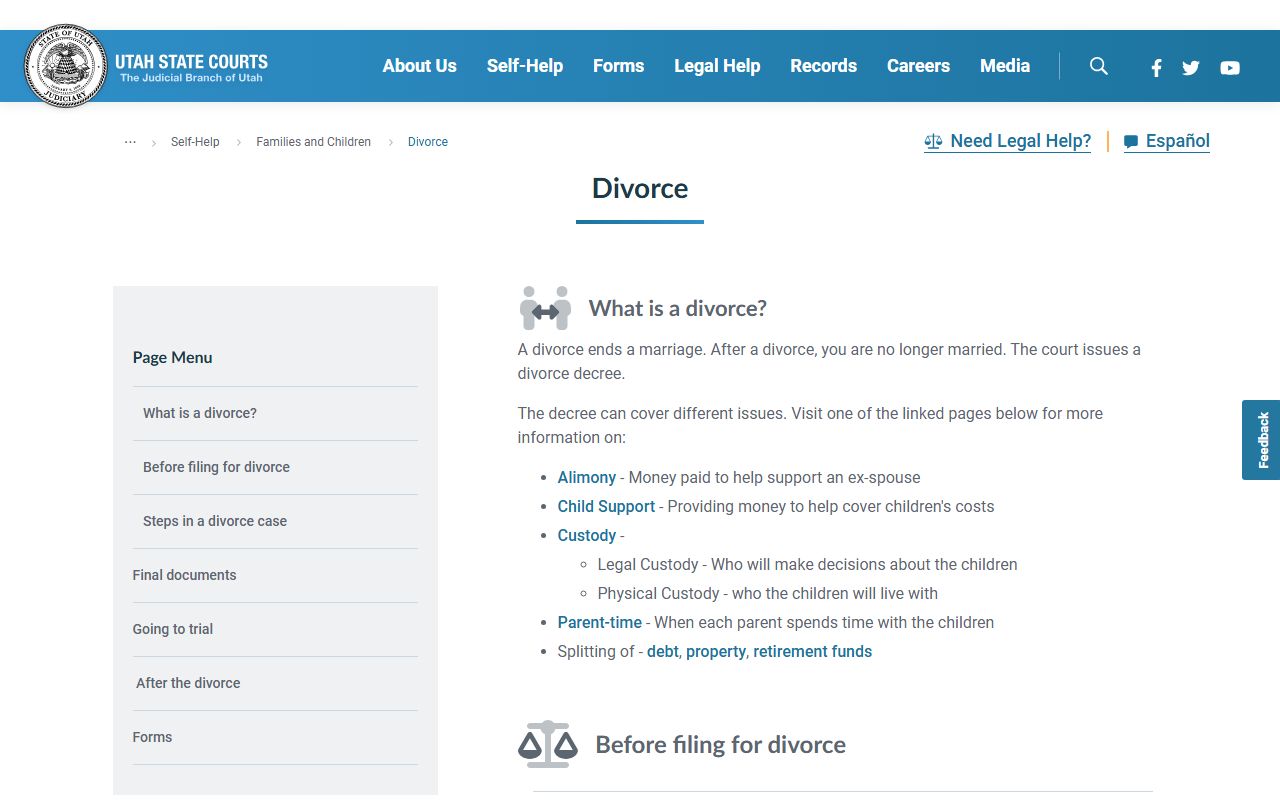
This page from the Utah Courts website outlines steps for obtaining records and preparing for dissolution proceedings across all Utah counties, including San Juan.
For older records predating court digitization, the Utah State Archives holds historical dissolution records going back to Utah's territorial period. Researchers can contact the Archives at (801) 531-3800 to request older San Juan County dissolution records.
Utah State Archives and Historical San Juan Records
The Utah State Archives preserves government records from across the state, including dissolution records from San Juan County that may date back well over a century. These older records are particularly useful for genealogical research or legal matters involving property that changed hands long ago.
Researchers can submit requests to the Archives by mail, phone, or through their online catalog. The Archives is located in Salt Lake City and can be reached at (801) 531-3800. Staff members are trained in helping researchers locate records from rural and remote counties like San Juan, where local record-keeping practices varied over the decades.
Note: Some very early records from territorial-era San Juan County may be incomplete or stored separately from later records; Archives staff can advise on what is available and in what format.
Vital Records for San Juan County Dissolution
The Utah Office of Vital Records maintains dissolution certificates for cases finalized across all Utah counties. These certificates are separate from court records. They confirm that a dissolution was granted and include basic identifying information.
The office is located at 288 North 1460 West, Salt Lake City, UT 84116, and can be reached at (801) 538-6105. The first certified copy costs eighteen dollars. Each additional copy ordered at the same time is ten dollars. San Juan County residents who need a dissolution certificate for legal purposes such as remarriage or a name change should contact this office.
The image below shows the Utah Office of Vital Records website, which serves all Utah residents including those in San Juan County.
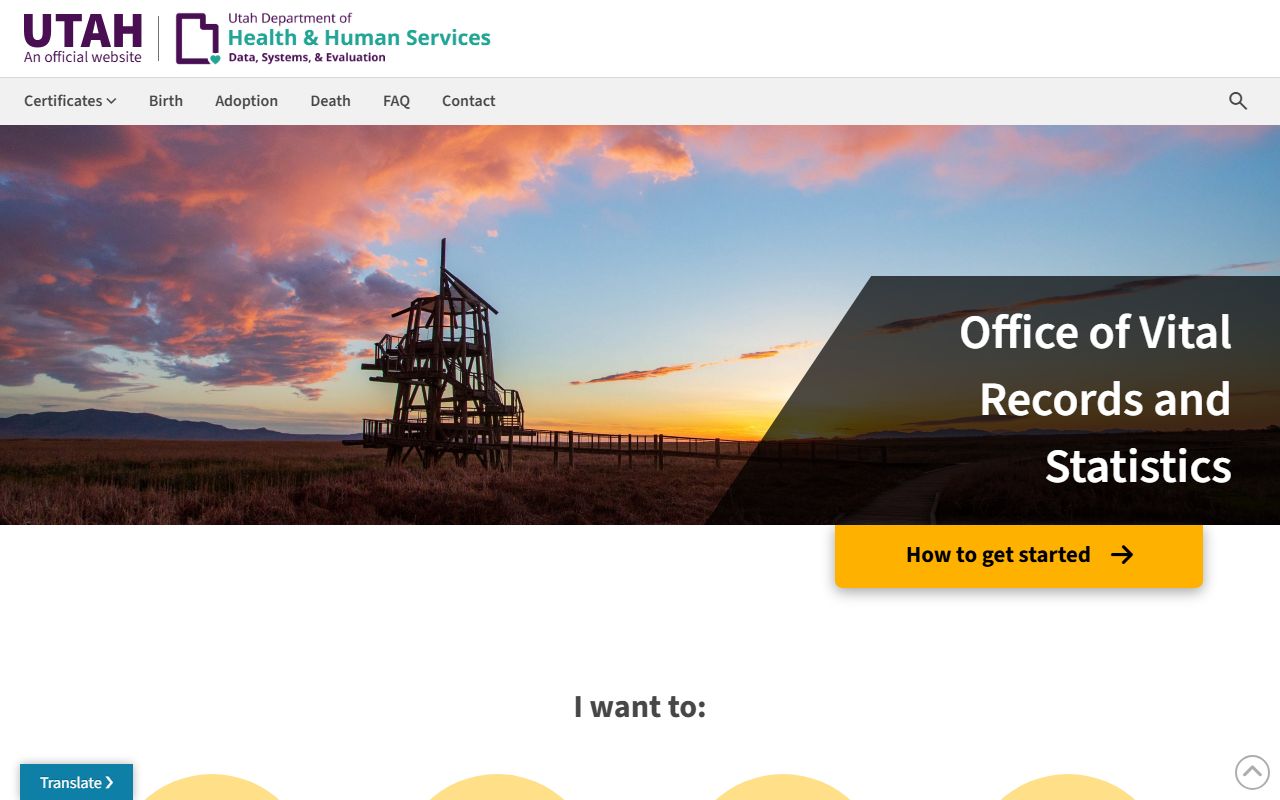
Orders can be submitted in person, by mail, or online through the Vital Records website depending on what options are currently available.
Self-Help and Legal Resources for San Juan County
San Juan County residents without an attorney can use the Utah Courts' online self-help center at utcourts.gov. The site explains each step of the dissolution process and connects users with the OCAP document preparation program. OCAP charges a modest fee and generates court-ready forms based on the user's answers to guided questions.
Income-eligible residents of San Juan County may qualify for assistance through Utah Legal Services. This statewide nonprofit provides civil legal help to those who cannot afford private attorneys. The organization has experience assisting residents of rural and underserved communities throughout Utah.
The Utah State Bar's lawyer referral line at (801) 531-9077 can connect callers with licensed attorneys who handle family law cases. Attorneys based in nearby counties or larger cities may be willing to represent San Juan County clients, particularly in uncontested cases where in-person appearances are limited.
GRAMA and Record Access Rights in San Juan County
Utah's Government Records Access and Management Act gives residents the right to request records held by government agencies. While court records have their own access rules set by the judicial branch, GRAMA governs records held by county offices and other executive branch agencies.
When requesting records from any San Juan County government office, a written request describing the records sought is recommended. The agency has ten business days to respond. Agencies that deny a request must provide a written reason. San Juan County residents who believe a denial was improper may appeal under the GRAMA process.
Understanding the difference between GRAMA and court record access rules helps residents know which office to contact and what process to follow when seeking dissolution-related documents from different sources.
Cities in San Juan County
San Juan County includes Monticello, Blanding, Bluff, Mexican Hat, and Montezuma Creek, with Blanding being the largest city in the county.
Nearby Counties
San Juan County shares borders with several Utah counties, each with its own district court handling dissolution matters.