
Kane County Utah Marriage Dissolution Records
Kane County stretches across south central Utah and shares a border with Arizona, making it one of the state's most geographically distinct counties. Named for Thomas L. Kane, a supporter of early Mormon settlers, the county seat of Kanab is home to the Sixth District Court, which handles dissolution of marriage cases for Kane County residents. This page explains how to locate records, what documents are publicly available, and which state offices provide additional support for those navigating a dissolution case in this part of southern Utah.
Kane County Quick Facts
Sixth District Court Kane County Dissolution
The Sixth Judicial District serves six counties: Garfield, Kane, Piute, Sanpete, Sevier, and Wayne. Kane County dissolution petitions are filed with the Sixth District Court clerk in Kanab. The clerk's office processes incoming cases, maintains the case file, and provides copies of public documents to those who request them with the required fee and identifying information.
Because the Sixth District spans a wide area, procedures and staffing levels can vary. Calling the Kanab courthouse before visiting is a practical step. The Utah Courts directory keeps current phone numbers and addresses for each district location, including the Kane County courthouse in Kanab.
All dissolution cases in Kane County follow the same Utah Code framework that applies statewide. Local rules may add procedural details, but the substantive law is uniform across all Utah counties.
Kane County Divorce Filing Requirements
Filing a dissolution petition in Kane County requires that at least one spouse have been a Utah resident for three full months before the petition date. The filing party submits a petition, a summons, and any required financial disclosure forms to the Sixth District Court clerk. The other spouse is then served according to Utah's civil procedure rules, which the clerk can explain at a general level without giving legal advice.
The filing fee for a dissolution case in Utah is approximately three hundred twenty-five dollars. Additional filings within the same case carry separate fees. Courts also charge for copies of documents, currently around four dollars per document plus fifty cents per page. These amounts can change, so confirm current fees with the clerk before submitting payment.
The image below from the Utah Courts self-help page illustrates the general divorce filing process that Kane County residents follow when initiating a dissolution case.
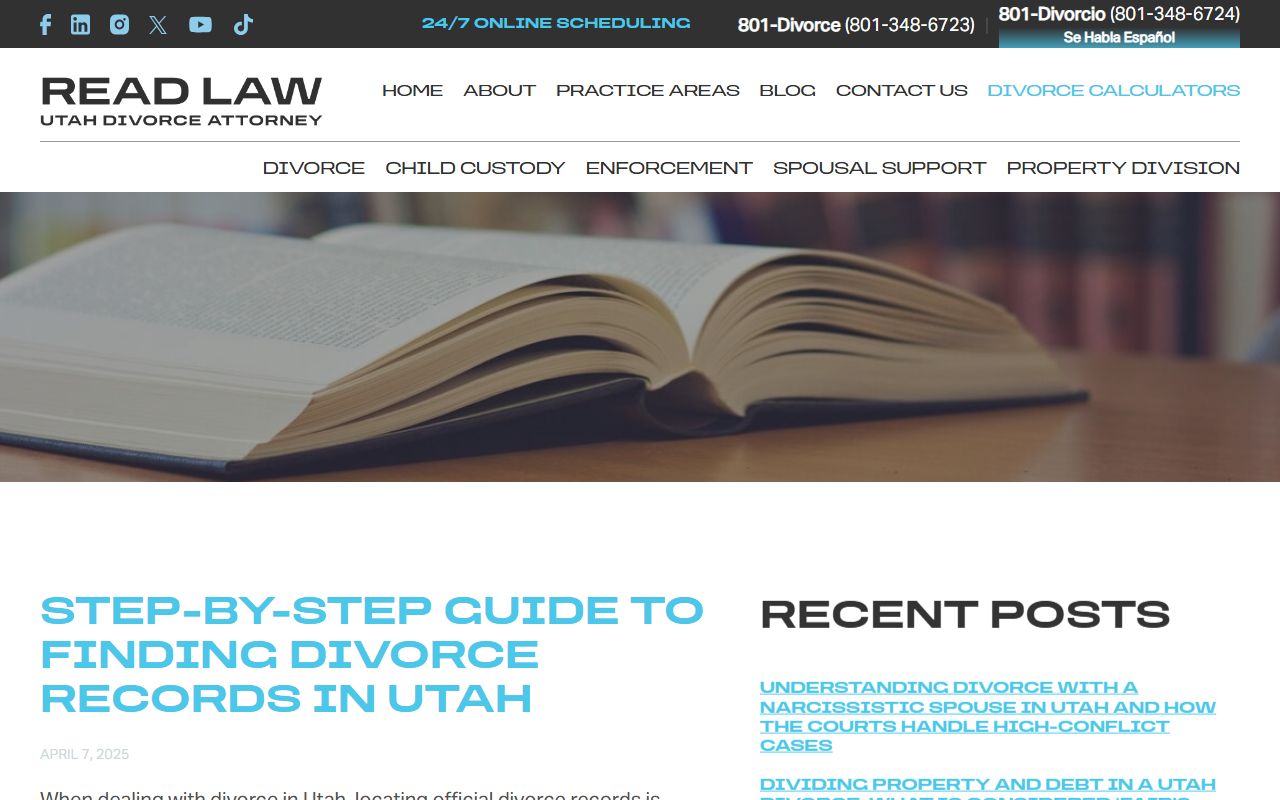
Forms for uncontested and contested dissolutions are available through the Utah Courts self-help portal. Using the correct form set for your situation reduces the chance of a rejection at filing.
Note: The three-month residency period is measured from the date Utah became a person's primary residence, not from any date of intent or separation.
Kane County Dissolution Records Public Access
Utah law changed access rules for divorce case files on April 1, 2012. Case files created after that date are private under state court rules. The parties themselves, their attorneys, and those with a court order may view restricted case files. Decrees and court orders, however, remain public documents regardless of when the case was filed.
For cases filed before April 1, 2012, the older public access standard applies. Researchers, genealogists, and others seeking historical records from Kane County may be able to access pre-2012 case documents through the Sixth District Court clerk or through the Utah State Archives, depending on when the records were transferred.
GRAMA, the Government Records Access and Management Act found at Utah Code Title 63G, Chapter 2, governs how courts and state offices handle public records requests. Knowing your rights under GRAMA helps when a records request is delayed or denied.
Utah Vital Records For Kane County Residents
The Utah Office of Vital Records and Statistics in Salt Lake City maintains a statewide index of dissolution records. Kane County residents do not need to travel to Kanab to request a certified copy of a decree. The Vital Records office, located at 288 North 1460 West, Salt Lake City, UT 84116, handles mail and in-person requests. The phone number is (801) 538-6105.
Certified copies of dissolution records cost eighteen dollars for the first copy and ten dollars for each additional copy ordered at the same time. Requests by mail require a completed application form, a copy of a valid government-issued ID, and a check or money order for the correct amount. The Vital Records website provides current application forms and detailed instructions.
Keep in mind that Vital Records may not hold records that predate statewide registration. Older Kane County dissolution records may only exist at the courthouse or at the State Archives.
Utah State Archives And Kane County History
The Utah State Archives stores historical records transferred from county courthouses and state agencies. Some older Kane County dissolution and probate records may have been transferred to the Archives rather than remaining in the Kanab courthouse. Searching the Archives catalog at archives.utah.gov before contacting the clerk can save time and clarify where a specific file is held.
The Archives can be reached by phone at (801) 531-3800. Staff can help identify which records are held in Salt Lake City versus those still at the county level. For genealogical research involving early Kane County marriages and dissolutions, the Archives is often the most productive starting point.
Note: The Archives catalog is searchable online and allows filtering by county, record series, and approximate date range, which makes it easier to locate older Kane County files without an in-person visit.
Waiting Periods After Filing In Kane County
Utah sets a mandatory waiting period that applies in every county, including Kane. The court must wait thirty days from the filing date before entering a final decree in cases without minor children. When the couple has minor children, the waiting period extends to ninety days.
These periods cannot be shortened by agreement between the spouses or by local court order. They reflect the legislature's intent to allow time for reconsideration before the dissolution becomes final. Planning around the waiting period is important when a dissolution is tied to deadlines like property transactions or custody arrangements that need to be finalized by a certain date.
Utah Code Title 30, Chapter 3 sets out the waiting period rules and the equitable distribution standard that governs property division in Kane County cases. The full text of the statute is at le.utah.gov.
Judicial Districts And Kane County Court Structure
The image below from the Utah Courts directory page shows how the state's judicial districts are organized, including the Sixth District that serves Kane County.
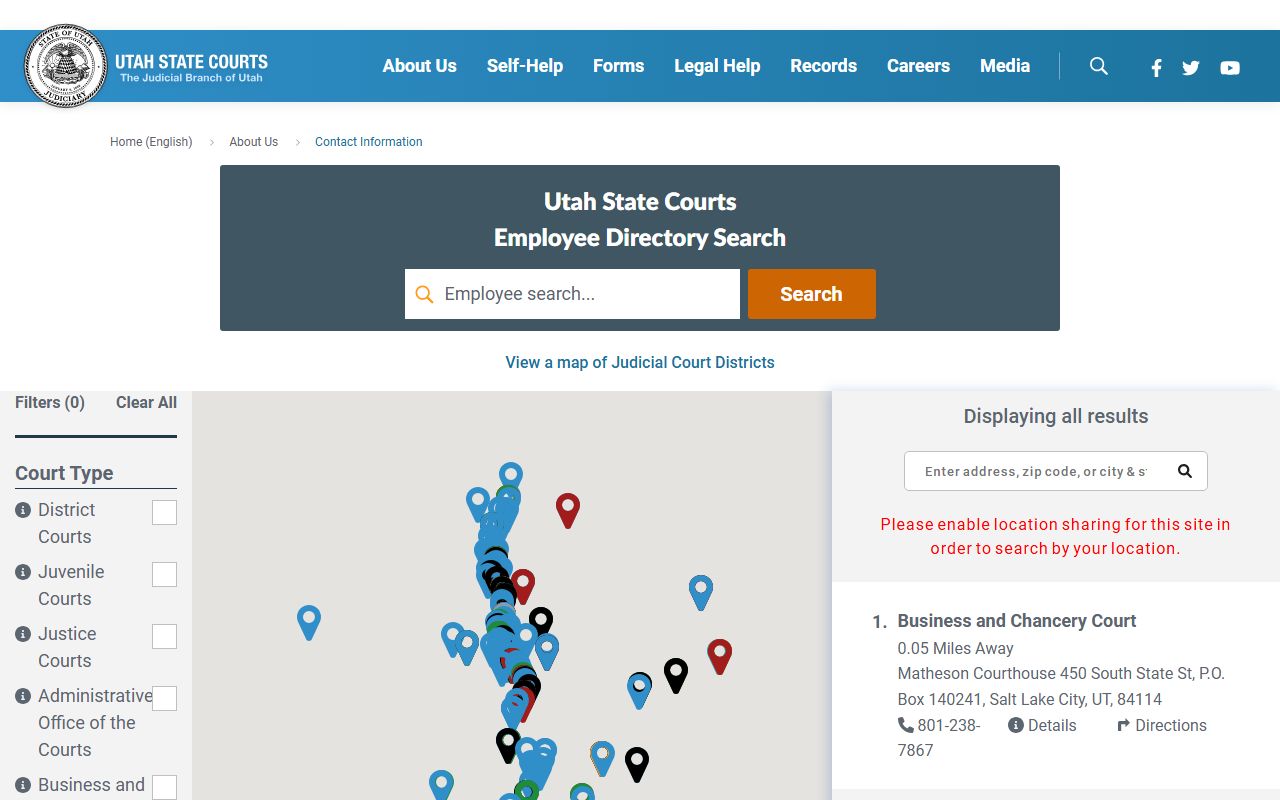
The Sixth District is one of the larger Utah judicial districts by geographic area. Kane County is at the southern edge of the district, bordering Arizona and the communities around Kanab, Big Water, and Glendale. Understanding the district structure helps you identify the correct courthouse for any filing or records request.
Legal Aid And Self-Help For Kane County Filers
Kane County residents who cannot afford private legal counsel may qualify for assistance through Utah Legal Services. This nonprofit provides free civil legal help to income-eligible individuals, including those involved in dissolution cases that raise custody, support, or safety concerns. Eligibility is based on household income and the nature of the legal issue.
The Utah Courts self-help page at utcourts.gov/howto/divorce provides step-by-step guides, fillable forms, and explanations of each stage of the dissolution process. Self-represented litigants in Kane County can use these resources to prepare accurate filings and respond correctly to documents served by the other party. The Utah State Bar referral line at (801) 531-9077 connects callers with licensed family law attorneys for those who prefer professional representation.
Cities in Kane County
Kane County includes the communities of Kanab, Big Water, Glendale, Orderville, and Alton, with Kanab serving as the county seat and home to the Sixth District Court clerk's office.
Nearby Counties
Kane County borders several other southern Utah counties, and residents near county lines should confirm which district court serves their place of residence before filing.