
Juab County Dissolution Of Marriage Records
Juab County sits in west central Utah, a wide stretch of land whose name traces back to a Native American word meaning valley. The Fourth District Court in Nephi handles all dissolution of marriage proceedings for residents of this county. Whether you need to file a new petition or locate a past decree, understanding where records are kept and what access rules apply is the first step. This guide covers the court process, record availability, and the state offices that support Juab County residents through each stage of a dissolution case.
Juab County Quick Facts
Fourth District Court and Juab County Divorce
The Fourth Judicial District covers Juab, Millard, Utah, and Wasatch counties. For Juab County residents, the relevant courthouse is located in Nephi, the county seat. All dissolution petitions, motions, and final decrees pass through the Fourth District Court clerk's office. Contacting that clerk directly is the most reliable way to confirm current hours, required forms, and any local standing orders that apply to family law cases in this district.
Utah courts use the term dissolution of marriage rather than divorce in formal filings, though both terms refer to the same legal process. The court file contains the petition, the summons, any temporary orders, financial disclosures, and the final decree. Knowing which documents exist within a case helps you request exactly what you need from the clerk rather than paying for copies of the entire file.
Utah's court directory lists current contact details for Fourth District locations. Check that page before visiting in person, since clerk hours and courthouse locations can change.
Utah Residency Rules For Filing In Juab
State law requires that at least one spouse have lived in Utah for three months before filing a dissolution petition. This rule applies to Juab County filers just as it does everywhere in the state. The three-month clock runs from the date a person establishes Utah as their primary residence, not from a date of separation or a date of intent to file.
Residency applies to Utah as a whole, not to a specific county. A person who moved to Nephi from another Utah county does not need to wait an additional period, so long as the combined Utah residency reaches three months. The Utah Code Title 30, Chapter 3 sets out the full residency standard and the ten recognized grounds for dissolution, including irreconcilable differences.
Short residency is one of the more common reasons a case gets dismissed early. Verify the timeline before filing.
Note: If both spouses agree on all terms, an uncontested dissolution in Juab County typically moves faster, though the mandatory waiting periods set by state law still apply.
Juab County Dissolution Records And Public Access
Utah changed its public records rules for divorce cases on April 1, 2012. Case files opened after that date are private, meaning the underlying documents are not freely available to members of the public. Decrees and orders issued by the court, however, remain accessible. This distinction matters when you are trying to locate a specific document from a recent case versus an older one.
For cases filed before April 1, 2012, the records follow the older public access standard, and you may request copies through the Fourth District Court clerk. The clerk charges a base fee per document and an additional per-page copy charge. Bring the names of the parties and an approximate filing year to help staff locate the file quickly.
The state's Government Records Access and Management Act, known as GRAMA, governs how courts and agencies respond to records requests in Utah. Understanding GRAMA gives you a clear framework for what to request and how to appeal if a request is denied.
Utah Vital Records Office For Juab Residents
The Utah Office of Vital Records and Statistics maintains a statewide index of divorce records. Juab County residents can request certified copies of dissolution records through this office regardless of which courthouse handled the original case. The office is located at 288 North 1460 West, Salt Lake City, UT 84116, and can be reached at (801) 538-6105.
The source below describes the Vital Records office and the types of documents available to the public statewide.

Certified copies from Vital Records cost eighteen dollars for the first copy and ten dollars for each additional copy ordered at the same time. Mail requests require a completed application form, a government-issued ID copy, and a check or money order. Processing times vary by volume, so request early if you need a certified copy for a legal proceeding.
Note: Vital Records can confirm whether a dissolution was recorded but may not have older historical records that predate statewide registration. The Utah State Archives may hold earlier documents.
Utah State Archives And Historical Juab Records
The Utah State Archives preserves older court and county records that have been transferred from active custody. Some Juab County dissolution records from earlier decades may be held at the Archives rather than at the courthouse. The Archives is reachable at (801) 531-3800 and maintains an online catalog at archives.utah.gov.
Searching the Archives catalog before contacting the courthouse can save time. If a file has been transferred to the Archives, the courthouse clerk will not have it on hand. The online catalog is searchable by county, record type, and date range, which makes it possible to confirm holdings before making a trip or placing a written request.
Waiting Periods And Decree Timing In Juab
Utah imposes a waiting period between filing a dissolution petition and entry of a final decree. The standard period is thirty days. When the parties have minor children, that period extends to ninety days. The court cannot finalize the dissolution before the waiting period expires, even if both spouses agree on every issue.
These waiting periods are set by state law and cannot be waived by local court order. Juab County filers should plan their timelines accordingly, especially if the dissolution involves custody arrangements, property division under the equitable distribution standard, or support orders. The Utah Courts self-help page walks through the sequence of events from filing through final decree.
Equitable distribution does not mean equal division. It means the court divides property in a way that is fair given the circumstances of both spouses.
Self-Help And Legal Aid Resources For Juab County
Not every person who files a dissolution petition in Juab County has an attorney. Utah Courts provides a self-help center with forms, instructions, and guides written for people who represent themselves. The self-help resources are available at the link above and cover topics from completing the initial petition to responding to a spouse's filing.
For those who qualify based on income, Utah Legal Services offers free civil legal help. Dissolution cases that involve children, domestic concerns, or complex property issues are among the situations where having legal guidance can affect the outcome significantly. The Utah State Bar also operates a referral line at (801) 531-9077 for those who need help finding a licensed family law attorney.
The image below comes from the Utah Courts self-help page and reflects the types of guidance available to Juab County residents handling their own cases.
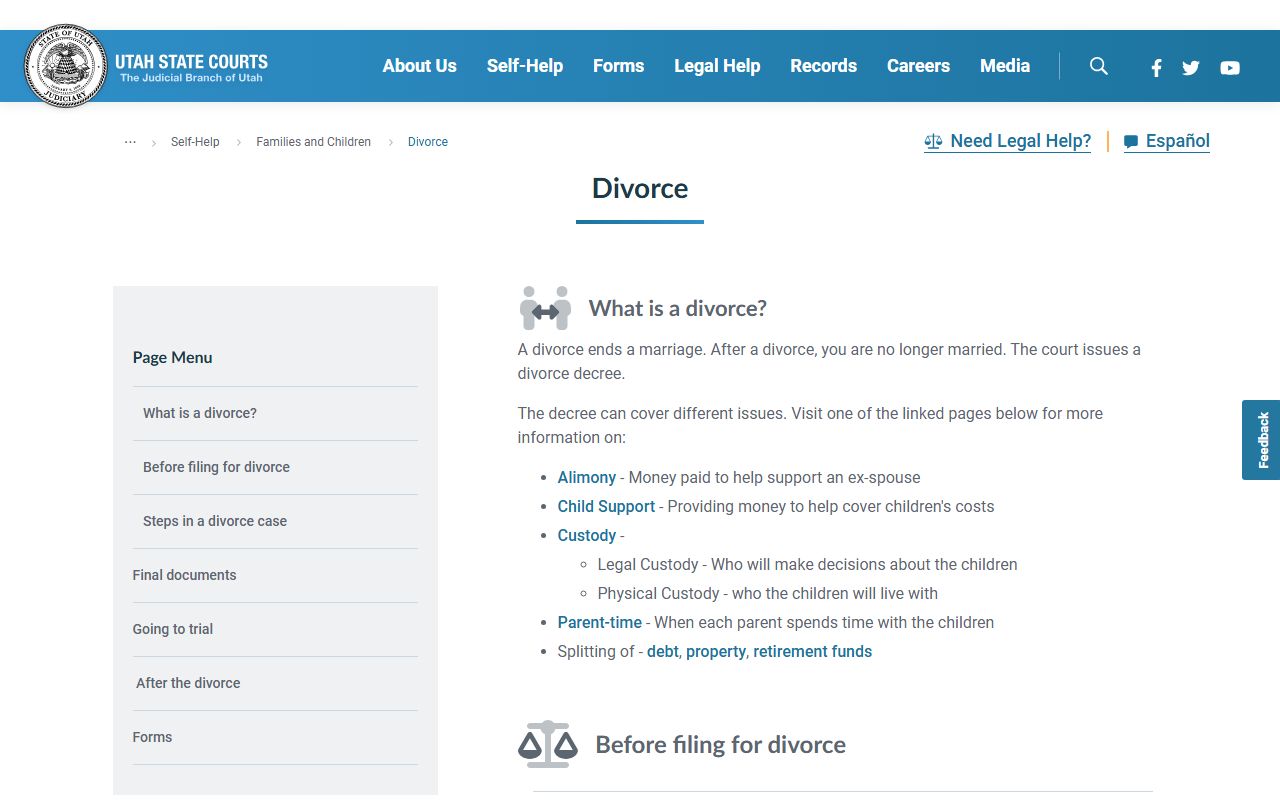
Self-representation is permitted in Utah courts. The clerk's office can assist with procedural questions but cannot give legal advice. Knowing that difference helps you direct your questions to the right source.
Utah Code Title 30 And Juab County Cases
All dissolution cases in Juab County proceed under Utah Code Title 30, Chapter 3. That chapter establishes the grounds for dissolution, the residency requirement, waiting periods, property rules, and the standards courts use when children are involved. Understanding the law that governs your case gives you a foundation for working through the process, whether with an attorney or on your own.
The image below links to the Justia reference for Utah Code Title 30 and provides context on how the statute shapes dissolution proceedings statewide.
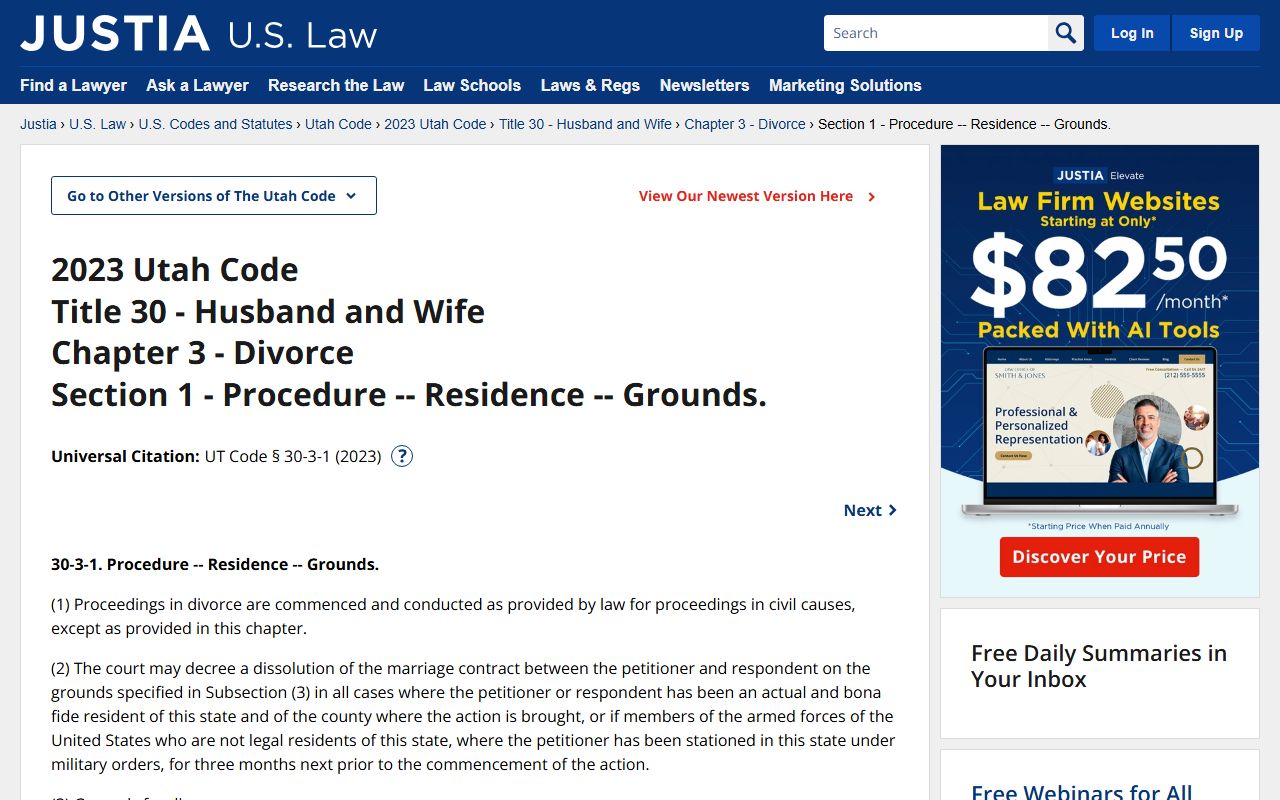
Juab County cases follow the same statutory framework as every other Utah county. Local court procedures may differ slightly, but the underlying law is uniform across the state.
Note: Amendments to Title 30 can affect pending cases. Review the current version of the statute or consult an attorney if you have questions about how a recent change applies to your situation.
Cities in Juab County
Juab County includes the communities of Nephi, Mona, Levan, Eureka, and Mammoth, with Nephi serving as the county seat and the location of the Fourth District Court clerk's office.
Nearby Counties
Juab County borders several other Utah counties, each served by district courts that handle dissolution filings for their own residents.